https://offcourse.org
ISSN 1556-4975

Published by Ricardo and Isabel Nirenberg since 1998
"Hsi-Wei and the Broken Engagement," a story by Robert Wexelblatt
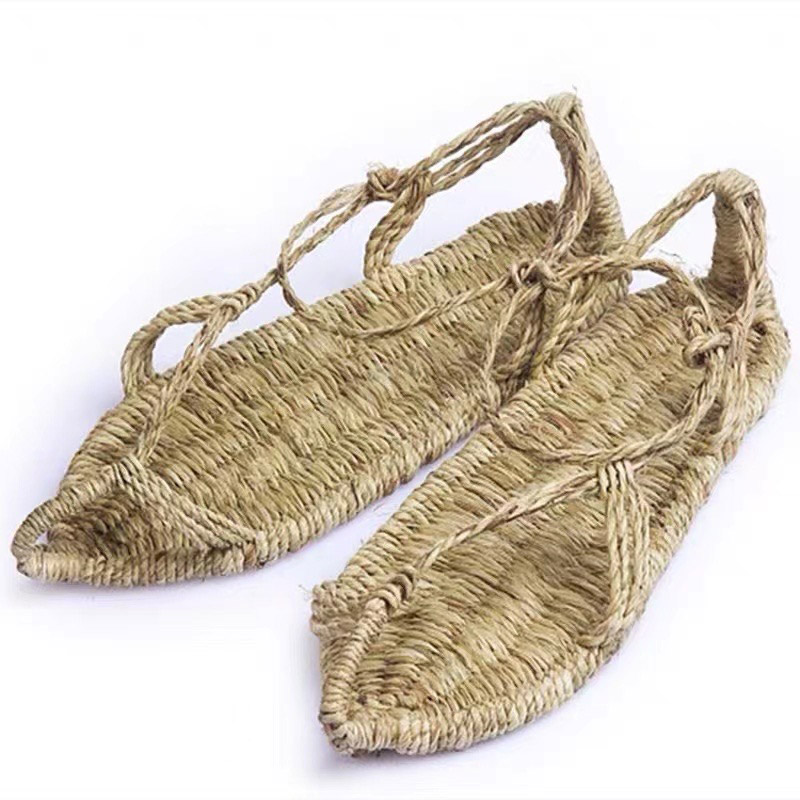
In the town of Luling, Chen Hsi-wei had set up his board in the marketplace soliciting orders for straw sandals. It was his second day in the place when he was surprised by the approach of formally dressed man who strode across the square, making straight for him. The man was tall, imposing, and yet, though obviously used to being attended to, he appeared more curious than arrogant. He wore a dark green gown and on his head the black fotou favored by officials. Officials rarely bought straw sandals.
More unexpected still was what the man said after looking Hsi-wei up and down, taking in the dusty trousers, patched shirt, the worn leather jerkin.
“Sandal-maker, are you able to read and write?”
“Sir,” replied Hsi-wei, “to do the one may lead to the other. Yes, I can do both.”
The man’s face brightened; he smiled. “Ah. And do you perhaps write poems?”
Puzzled, Hsi-wei confessed that had been guilty of that vanity.
“And is your name perhaps Chen Hsi-wei?”
For a moment the peasant/poet thought this man might be the local magistrate, come to arrest him for some unknown reason. But then he realized if that were the case, the official would be accompanied by at least two assistant magistrates—burly Shao-zhou Cishi—to take Hsi-wei into custody. Dismissing his apprehension, he answered firmly.
“Yes, sir. My name is indeed Chen Hsi-wei.”
“In that case, Sandal-Maker, I have a message for you.”
It turned out that this official, a deputy prefect, was a friend of one of Hsi-wei’s schoolmates from his difficult days in Daxing. Master Shen Kuo, who never reconciled himself to having to instruct a peasant, beat Hsi-wei and mocked his deplorable calligraphy. But it was also Master Shen who introduced the court to his pupil’s first efforts at verse, albeit with the aim of promoting his teaching rather than Hsi-wei’s writing, as a trainer might show off a dog he has taught to do tricks. Shen’s other students were all from well-off families, and most shared the Master’s contempt for the peasant thrust among them, but not all. Among those who treated Hsi-wei with kindness was Zhan Guangli, the only son of a rich landlord from Yangzhou. Zhan’s father had sent the boy to the capital to prepare for the state examination, become an official, and work his way up the ladder to, he hoped, a position at court. Hsi-wei learned much from Guangli, especially how to conduct himself among the rich. But when Guangli’s father died unexpectedly of a stroke, he was compelled to go home and take charge of the family's land and see to its interests. He and Hsi-wei said their farewells at a local tavern over a jug of yellow wine and parted the following morning with hangovers and tears.
After he went out on the road, leaving behind him new sandals and verses, Hsi-wei earned a measure of fame; that is, he was known to many people he did not know. Zhan learned that his old friend traveled throughout the Empire, living by sandal-making and that his poems were copied, circulated, and admired. Zhan had many connections in Yangzhou. He wrote to them all about Hsi-wei, asking them to keep an eye out for an itinerant sandal-maker named Chen Hsi-wei, a peasant who was not only literate but a poet. He begged that, should they encounter this person, they would deliver an invitation for him to visit Zhan’s estate. Each letter included a personal greeting to Hsi-wei and a map.
Zhan’s land lay in the mining region between the towns of Weiyuan and Qijang. Guangli could not have been happier to see Hsi-wei. He proudly introduced his friend to his wife Yue, his gangly five-year-old son and toddler daughter. The children were shy and looked askance at the stranger but bowed politely. Mrs. Zhan was as effusive as her husband. She said she had read and admired three of Hsi-wei’s poems and had often heard stories about him from her husband. She was a pleasingly plump woman whose goodness and sound sense shone from her wide face. The poet was pleased to see that Guangli treated her with affection and respect.
Hsi-wei had arrived at Zhan’s villa early in the afternoon. Guangli ordered the cook to prepare a feast for the evening, sent a servant off to buy a carp and two jugs of wine, then took his old friend for a stroll over his land. There were cultivated fields but most of the estate was planted with fruit trees and bushes. The dinner conversation was genial, dominated by questions to the stranger. Hsi-wei charmed the children with amusing little stories about his travels. He told Guangli about learning of their old master’s death and his effort to attend the funeral.
“I was two days late, but I visited his grave. There was a stray dog in the cemetery.”
“Did you write a poem about it?” Yue asked teasingly.
Hsi-wei blushed. “I did.”
And everyone laughed.
“I’d like to see that poem, if you’ve got a copy of it in that sack of yours,” said Guangli.
“I do and I’ll show it to you if you can give me some straw.”
“Straw?”
“To make sandals for these delightful children. Real peasant sandals.”
The children begged their father to give Hsi-wei all the straw he wanted.
Hsi-wei said he was surprised by the extent of Guangli's property given the redistributions of Emperor’s Wen’s Equal Field reforms.
“That’s due to my father’s foresight. He covered more than half of our land with orchards, apples, pears, and mulberry.”
“I see,” said Hsi-wei.
“Yes, under Emperor Wen’s reforms, orchards are classified as hereditary holdings. forbidden to sell or transfer them. And so, we’ve kept nearly all our land. So fortunate.” Guangli looked to the ceiling then bowed. “Thank you, wise father.”
After dinner, the drowsy but reluctant children were sent to bed. Hsi-wei showed his host and hostess his poem about Shen Kuo’s grave. Then he too went off to sleep on the most comfortable bed he had enjoyed since, to oblige his poetry-loving wife, a jade merchant in Longquan invited him to dinner then to stay the night.
Hsi-wei spent most of the following day in the garden telling stories to the children as they watched him fashion their sandals. Yue was busy about the house, giving instructions to the two servants, seeing to sweeping and laundering. But around midday she came out to the garden to ask what Hsi-we would like for lunch and if she might see more of his poems. Hsi-wei said he would be more than content with any lunch at all and would gladly give her some scrolls with old poems. As for Guangli, he apologized the night before for having to leave his guest to keep an appointment. It was not a meeting he could put off.
“Yao Li-fan is our local magnate,” he explained. “He buys and sells, imports and—what’s more important to me—exports. Yao’s quite an old man now but sharp as ever. I’ll need to be on my toes.”
Zhan returned in a sturdy carriage, drawn by two well-nourished horses, and accompanied by the magnate.
Guangli made the introductions.
“Mr. Yao knows who you are, Hsi-wei. It seems he’s been collecting your poems.”
“A dozen so far, Master Chen,” said Yao in a gruff voice.
“When I mentioned our old friendship and that you are visiting, he was eager to meet you.”
“Just so,” croaked Yao.
Hsi-wei made a deep bow. “I am honored, sir.”
Yao Li-fan was about sixty, lean and energetic, with an intelligent face and sharp eyes. He had the sort of self-assurance Hsi-wei had often remarked in successful merchants.
“Mr.Yao has graciously consented to stay to dinner which, if you’ll excuse me, I’ll go and arrange right away.” Guangli deftly herded the children inside and left his two guests together in the garden.
“I know of no other peasants who write verses,” Yao observed with a thin smile. “I am pleased to meet such a rarity.”
“Your interest does me honor, sir. It is a pleasure to have found a reader.
“My favorites of what I’ve seen are ‘Yellow Moon at Lake Weishan,’ which everybody seems to like, then your brutal letter to Yang Jian and the modest one to Ko Qing-zhao. I am especially interested in letter poems. Yours seem to fall somewhere between the strictness of shi and the looseness fu.”
Hsi-wei realized he was being tested, his scholarship questioned. “I am drawn more to the old gushi form,” he said, “though the final rhymes in those poems often feel forced.”
Yao gave a sharp nod then, without any transition, asked, “Are you a Buddhist or a Confucian?”
“Neither, sir. Or perhaps a little of each.”
The old man offered another of his thin smiles. This one seemed ironic. “You know how to give a diplomatic answer.”
“You mean an evasive one?”
Yao made a sound that might have been a chuckle. “Exactly.”
“May I ask, Mr. Yao, if you have an allegiance to the strictures of Kong Qiu or the teachings of Buddhism that the emperor wishes to promote?”
“Perhaps I’ll have something to say to you about that later. But tell me, do you approve of this saying: ‘The superior man, while his parents are alive, reverently nourishes them; and, when they are dead, reverently sacrifices to them’?”
“Kong Qiu teaches us our obligations and how duty maintains order. Yet some may chafe at his constraints.”
“I see. What about this one: ‘If you want to fly, give up everything that weighs you down’?”
“The Buddha is wise about what the spiritually ambitious must start by giving up.”
“And might the things given up include duties laid down by Kong Qiu?”
“Yes, it’s possible. The Buddha said ‘No one saves us but ourselves. We ourselves must walk the path.’”
“Hm. Then would you say that, if a Confucian received the calling, he might have to cease being a good Confucian to become a good Buddhist?”
“I suppose so,” said Hsi-wei, puzzled by the businessman’s fixation on these religious matters.
Then Guangli returned and the conversation turned to weather and market prices
The dinner was an even more elaborate banquet that then previous night’s, with six courses including both pork and fish. Mr. Yao grew animated and dominated the conversation. He complimented Yue on the food, talked with Guangli about what he expected of his fruit harvest, and requested Hsi-wei’s opinion of the poems of Chen Shubao, the defeated emperor of the Chen dynasty who, he had heard, was in the capital and being well treated by his conqueror.
“A better poet than a ruler,” Hsi-wei replied tersely.
This succinct judgment seemed to please Yao. “Just so,” he said. “Faint praise for the one, none at all for the other.”
The men drank only one cup of wine each. Yue excused herself to see to the children. Right after that, the merchant stood to take his leave.
“It’s late,” he said. “Guangli, thank you for your gracious hospitality and be sure to thank your wife as well.” Then he turned to Hsi-wei. As for you, Master Chen, I would be obliged if you would pay me a visit me tomorrow. I’ll send my carriage for you in the morning. There’s something I would like to show you. Will you come?”
Aware that Guangli might be disappointed if he refused, but also intrigued, Hsi-wei consented with a short bow.
The ride in Yao’s carriage took most of an hour. Hsi-wei saw two of the iron mines for which the region was known. The rest was peasant hamlets and fields, mostly of grain with forest covering the distant highlands. Yao Li-fan’s villa was set far back from the main road with tall white pines on either side of the approach. The villa was large, a kind of compound. Hsi-wei counted four one-story extensions from what must have been the original building and also five substantial outbuildings. He spied what looked like a wide garden at the back. All the extensions were low and long, not unlike the stables for the emperor’s cavalry in Daxing. The roof tiles were yellow, and the walls were painted an unusual color too, something between blue and gray, like the sky on a day neither sunny nor overcast. The effect was restful, unlike the red of power favored by the wealthy elsewhere.
A young servant in an immaculate shirt and pleated robe was waiting for Hsi-wei as he descended from the carriage. He bowed to the guest and invited him into the main house, then conducted him through a well-appointed parlor and down a broad corridor to his master’s study. This was a large room at the back of the house with three walls fitted with wooden shelves for scrolls. There were cushions, a divan, a pair of matched chairs with carved arms and legs, and an outsized desk. A broad window looked out on the garden which was as big as Hsi-wei had guessed. He saw fruit trees, varicolored shrubs, flower beds, high grasses, a clump of bamboo—the magnate’s refuge, a child’s playground, a gardener’s empire.
Yao stood to greet his guest. He gestured toward a low table with a tray holding a teapot and cups, offered refreshment which Hsi-wei accepted, indicated one of the chairs, said that he had asked they not be disturbed by either of his wives, his three sons, his five daughters-in-law, or the grandchildren. Hsi-wei could meet as many of them who showed up when it was time for lunch. Then Yao got down to business.
“I want your opinion of a pair of letter-poems, the opinion of a poet. Or so I thought last night. Maybe I wanted to share the poems with somebody and, after meeting you yesterday, chose you. But now I know it isn’t only the poems I want to share. I want to tell you how they came to be written.”
“I’m at your service, Mr. Yao.”
“Good. You see, there’s a complicated story behind the poems. I’ve managed to cobble it together from early recollections and some hard evidence. In a sense, it’s the story of how I came to be. This is a personal matter, Master Chen. You understand?”
“Not yet,” said Hsi-wei candidly. “But I’ll do my best. I assume this is something you don’t care to share with your family?”
“Yes. I’m confiding only in you.”
Hsi-wei put down his teacup, nodded, and leaned forward to listen.
“My Grandfather, Ying An-ming, my mother’s father, bought this land and built this villa, which I’ve extended. Grandfather Ying I remember as a stiff old man who smelled of something burnt and terrified everybody. Whenever I was near him, he would pat my head, which I did not care for then any more than I would now.
“Grandfather made the family rich but not, as you may be thinking, from the land he acquired. No, his fortune came from underneath it. Our land, much reduced now by the reforms, was purchased bit by bit by Grandfather with money gotten from the tools and weapons he made out of the iron and copper he mined. The market was good in those days, even better than now, especially for weapons. This was, of course, before Emperor Wen pacified the country by conquering it.
“I know that Grandfather had three wives, yet only one child. That was my mother, Li-fen. This would not have been just a disappointment to Grandfather but a problem. He probably managed to accept that his name would vanish but to whom could he pass on his wealth, property, and business? The obvious answer was to his daughter’s husband. The problem was to choose that man wisely.”
“Did your mother’s feelings enter into his reckoning?”
Yao scoffed. “Maybe that’s how it is in peasants’ reckoning, but not for gentry like my grandfather—or me. You know the proverb: a marriage erected on love is built on water? Yes? Well, a marriage built on duty and respect for a father’s judgment has a firm foundation. Love should walk behind duty, not before.”
“I understand. Even with us insignificant peasants, it’s often so. Please go on.”
“Grandfather carefully observed the sons of the wealthy neighbors, of his successful competitors, and fellow men of business. It seems none of them satisfied him. He was a strict Confucian, a true conservative, and I imagine these young men, who were better at spending money than making it, appeared to him undisciplined and spoiled, pleasure seekers and wastrels. Young men of ambition and character probably left the region, either seeking education and opportunity in the cities or attaching themselves to one of the many warlords of the time. However, there was one young man on whom he looked favorably. His family name was Shi—I’m fairly sure of that—and his personal name may have been either Jie-han or Jun-pei. The Shi family was respectable but poor. So far as I’ve been able to discover, they grew millet and kept swine. They may have owned a small rice paddy as well. In any case, Mr. Shi died young, leaving his widow and a very young boy. That boy took great care of his mother. He worked the farm hard, but the land was poor and the weather unfavorable. He came to Grandfather, still a boy, and begged for work. I imagine him promising to do anything, work every day and for any wage. Grandfather took him on and, as the boy grew to manhood, gave him increasing responsibility. Jie-han, it seems, was true to the Confucian values of his father and made the support of his mother his chief aim in life. He was diligent, scrupulously honest, respectful. I was told that he was good-looking too. So, Grandfather decided that it was to Jie-han that he would marry his only child, my mother. I expect he liked the idea of disappointing the hopes of his rich acquaintances, congratulated himself on promoting merit, and even that he had come to think of Jie-han more as a son than a son-in-law.”
“And did his choice please your mother?”
“That again?”
“Surely a child wants to know if his parents love one another.”
“Did I say that Jie-han was my father?” Yao growled. “Is my name Shi?”
Chastened, Hsi-wei said nothing to this, offering only a small, embarrassed bow.
“As it seems to be important to you, I’ll say that I believe my mother did love Jie-han, that she loved him well before the engagement. But we are in the realm of speculation, you understand. My evidence is half-imagined.”
“So, your mother loved the man her father chose without consulting her? It would seem a fortunate arrangement, and yet something went awry. Didn’t he love her?”
“Oh no, I believe he did.”
“Was he perhaps afraid of making a life under the thumb of your grandfather? He sounds like a domineering man.”
Yao took a moment to consider this. “I see what you mean. It’s possible, but I rather think Jie-han was devoted to Grandfather, the most grateful and loyal of employees.”
“Do you know what went wrong, then?”
“Jie-han’s mother died. I think that’s what went wrong. It changed him. His duties to his mother bound him to the earth, so to say. Her death left him free to float into the sky.”
“You mean the calling?” Hsi-wei guessed.
Yao nodded. “That’s right. Jie-han immersed himself in the teachings of the Buddha. He spent all his free time with the local monks. He resolved to become one himself, to join one of the monasteries the emperor is doing so much to promote. He gave his land away, resigned from his job, and gave up my mother. I don’t know whether this was hard for him. I would like to think it was.”
The two men were quiet for a minute then Hsi-wei asked about the letter-poems Yao wished to show him
“Yes. I haven’t forgotten.”
The old man got to his feet and went into a corner of the study where a small bronze casket was set on a pillow. He carried it to the desk and motioned Hsi-wei to join him.
“I found this three months ago. Well, no, that’s not entirely right. I knew of it, that it belonged to my mother; but it was stored away in one of the outbuildings with the other possessions she left behind—slippers, gowns, combs, and some heavy old jewelry. When I happened on it. recently, I was curious. I was also clumsy. I broke the lock.”
Yao lifted the top of the casket.
“I thought this might be where she kept special things. Perhaps I should have left it as it was. If so, I wouldn’t know about Jie-han. I suppose I was vaguely aware that something had happened before my parents were married, something kept from me. As a child, I picked up hints, whispers among aunts and elderly cousins. But I wasn’t curious back then. Things were fine as they were. My parents were like two pillars holding up a porch roof and I was under it. It didn’t trouble me that the pillars were remote from each other. Like most children, I was selfish, thinking their only job was to shelter me.”
Yao lifted out a tiny statue of the Buddha carved in green jade, no bigger than his thumb. The extracted two pieces of parchment from and handed one to Hsi-wei.
“Read this one first. The author is obviously Shi Jie-han.”
Stag and Doe found one another in springtime,
spent the gentle summer together, browsing
and sleeping safely deep in Gongqing Forest.
Yet, when he felt the irresistible summons,
Stag left Doe, headed into the mountains,
fought his way up alone, facing wind,
snow, and wolves, consoled by one certainty,
that Doe would soon find a worthier companion.
Hsi-wei read the verses through twice then handed the parchment back to Yao.
“It’s almost a proper shi, isn’t it?” said Yao, then smiled. “Very apt, wouldn’t you say? Shi writing a shi? The lines are a bit irregular, but the length is right, and it draws its metaphor from nature—the stag, the doe. Do you think it a good poem?”
“I think it is a sincere poem.”
Yao frowned. “Another evasive answer.”
“No, sir. A sincere one. If, as you say, Jie-han loved your mother loved each other, then this letter-poem is not merely good but moving. Sincerity is often the enemy of well-made verse. But it seems to me this poem is good despite coming from the heart. The metaphor is hardly even indirect. If the facts are as you say, then the poem is both tender and almost brutally blunt. Do you think it pained your mother to read it?”
“How can I know? What I do know is that she wrote a reply, a poem that mirrors Jie-han’s. Either she made a copy or she never sent the original.”
Yao held up the tiny carved Buddha. “And, to me, this little statue proves how much my mother loved the man who left her.” He handed the second parchment to Hsi-wei.
Setting out from their nest among the reeds,
Drake and Hen glide as one across the water.
He is resplendent while she is modest,
keeping close by his side, more than content.
Though Drake may spread his wings
and rise as high as the clouds,
their pond is where both belong,
for he is her true home as she is his.
“Well?”
“It is brave, and it is sad.”
“Yes. But is it good?”
Hsi-wei took a moment to think, then, choosing his words carefully, spoke softly. “In every way it is the partner of Jie-han’s.”
Yao gave a little grunt, waited to hear more, then returned the poems and the Buddha to the casket.
“Grandfather wasn’t used to being thwarted; he would have been deeply disappointed. But his problem remained. His second choice for my mother—my father—he made without sentimentality. It was the second son of a business associate in Luoyang. But he made a condition, insisting that instead of my mother going north to live under his roof, the groom would come south to live beneath this one.”
“He wouldn’t let his daughter go.”
“No. Perhaps he felt that, if she was to be unhappy, she should be unhappy where he could see her, where they might console each other.”
Lunch was quick and quiet and the two ate it alone. Yao’s family, except those who were at work, had all gone off to picnic by the river. The weather was fine. What better way to avoid disturbing the old man and his unprepossessing guest?
The conversation over lunch hardly got started. To break the silence, Yao asked about the north. Hsi-wei recalled an experience he had in Jizhou, but neither man really wanted to talk.
Yao’s carriage took Hsi-wei back to the Zhans’ villa. The children ran to greet him, eager to show off their new straw sandals.
Dinner that night was made from the leftovers of the night before, disguised with heavy sauces. It began to rain. The children yawned, then so did Yue, and off they went.
Guangli brought out the wine jug, filled two cups, and asked about the visit to Yao. Hsi-wei gave a short version of it then said he would be leaving in the morning.
“I thought as much, but I’d be glad if you stayed longer. The children will be heart-broken.”
Hsi-wei smiled. “Maybe so, but for about half an hour. Young hearts are resilient.”
“And fickle.”
The wine and the rain striking the rooftiles made both men sleepy.
Before going to bed, Hsi-wei wrote out a few verses, rolled up the scroll and tied it with a bit of string.
In the morning, he said farewell to the family, thanked them all, including the servants, and handed the scroll to Guangli.
“Next time you see Mr. Yao, please give him this for me.”
Here are the verses Hsi-wei wrote for Yao.
Mr. Yao, what did I learn in your study?
That while the heartfelt can make poor verses
and cleverly crafted ones are often insincere,
what lasts longest flows from a full heart
but is shaped by the impartial mind.
Stag and Doe. Drake and Hen.
Life demands only ducklings, fawns,
unconcerned that Stag loves Doe
or Hen should pine for Drake.
That, you would say, is a personal matter.
Robert Wexelblatt is a professor of humanities at Boston University’s College of General Studies. He has published seventeen collections of short stories; two books of essays; two short novels; four books of verse; stories, essays, and poems in a variety of journals, and a novel awarded the Indie Book Awards First Prize for Fiction.